
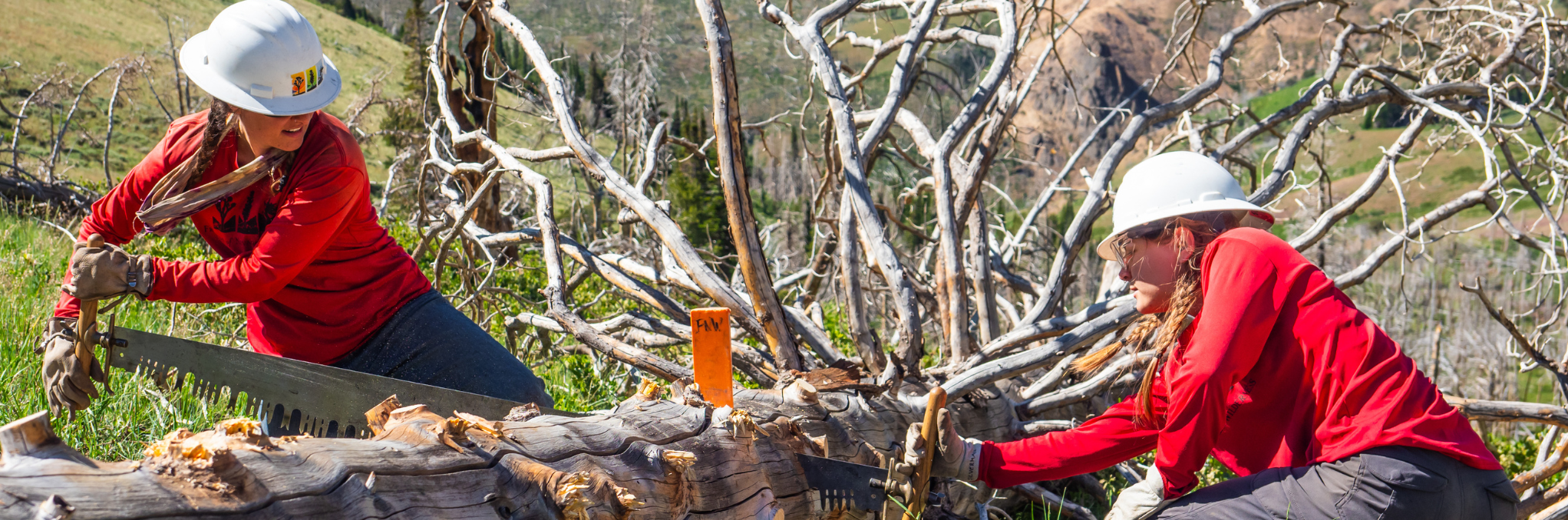
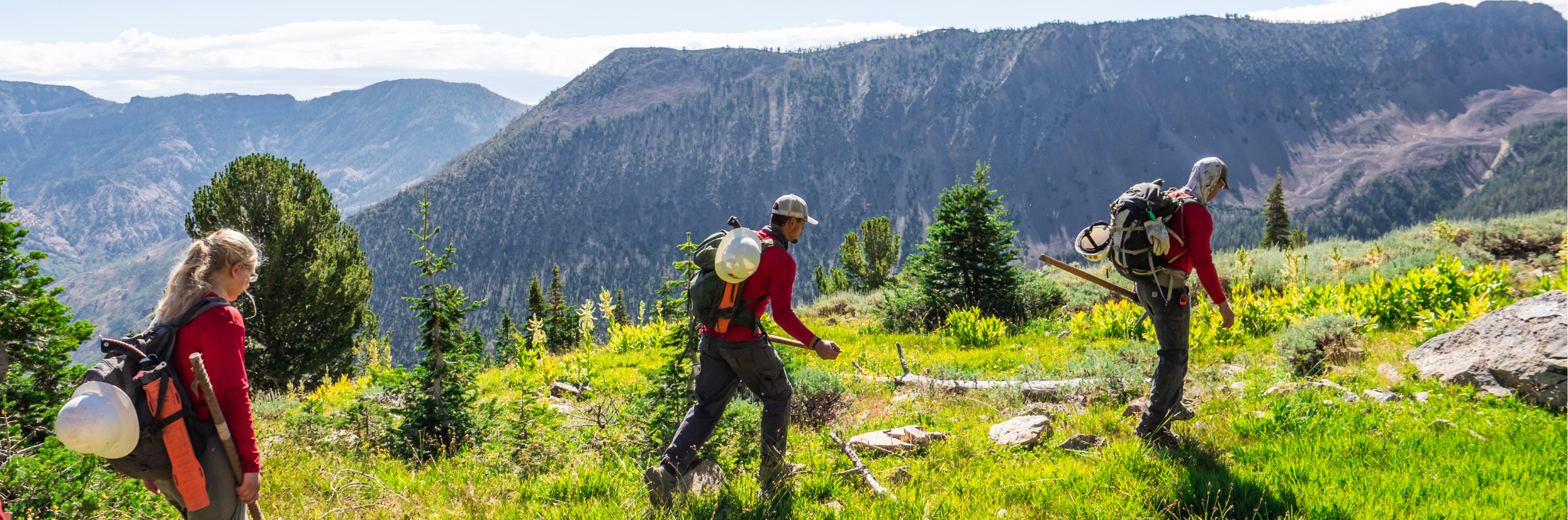

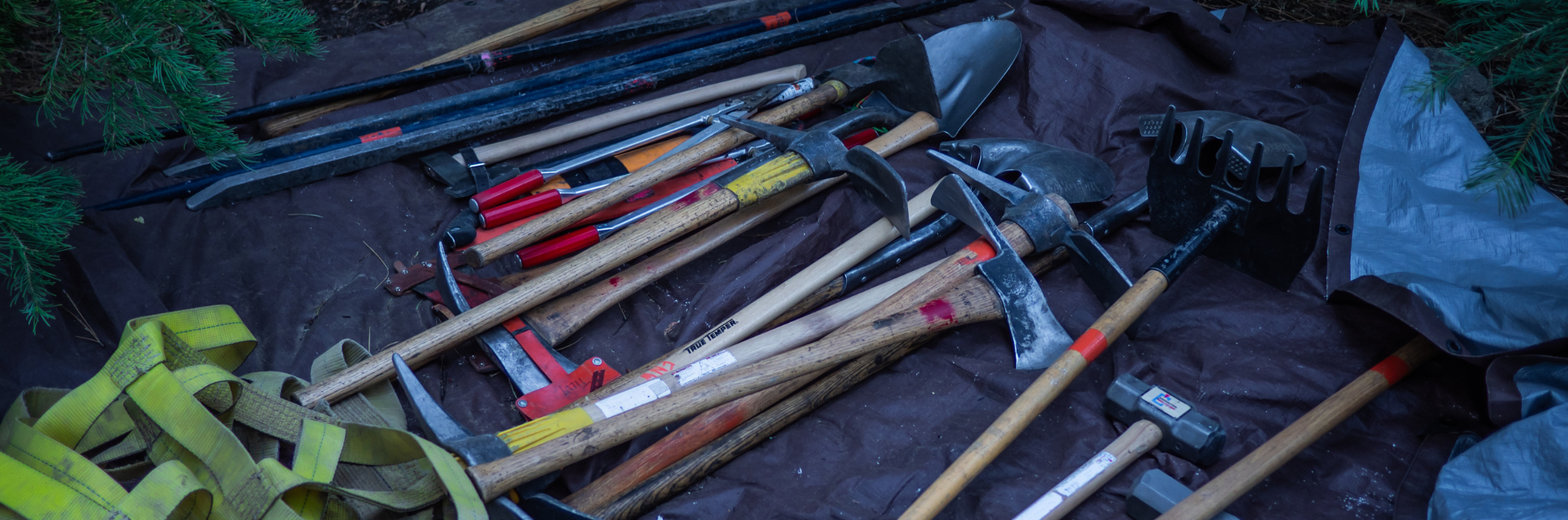
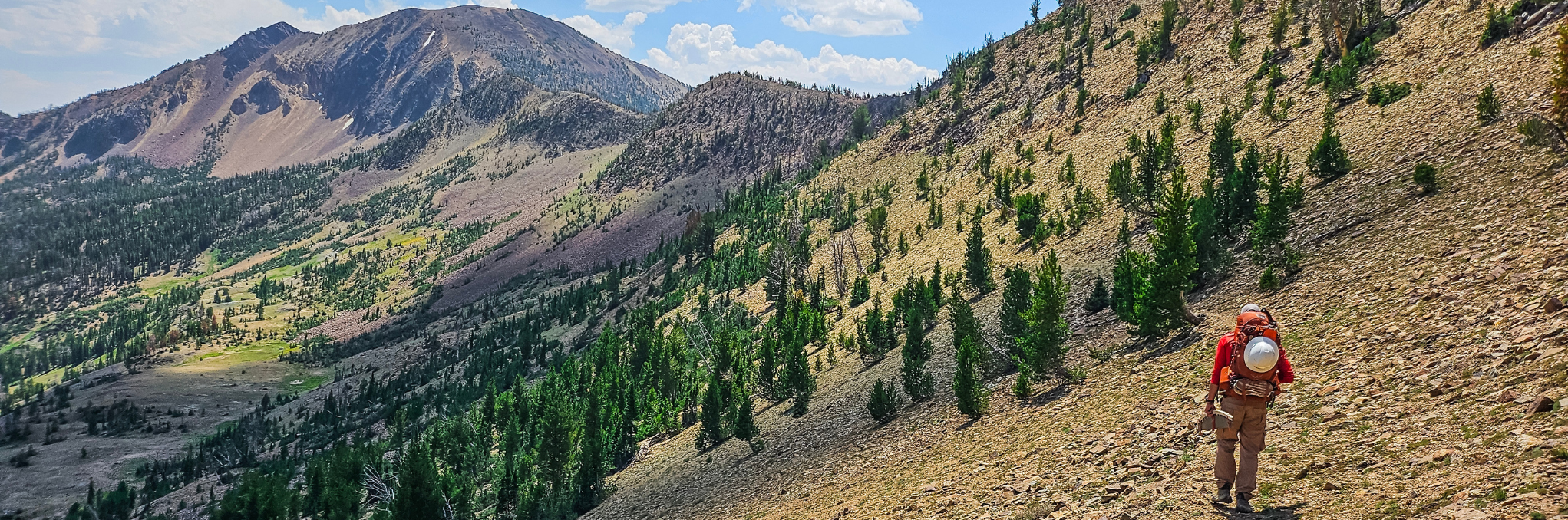
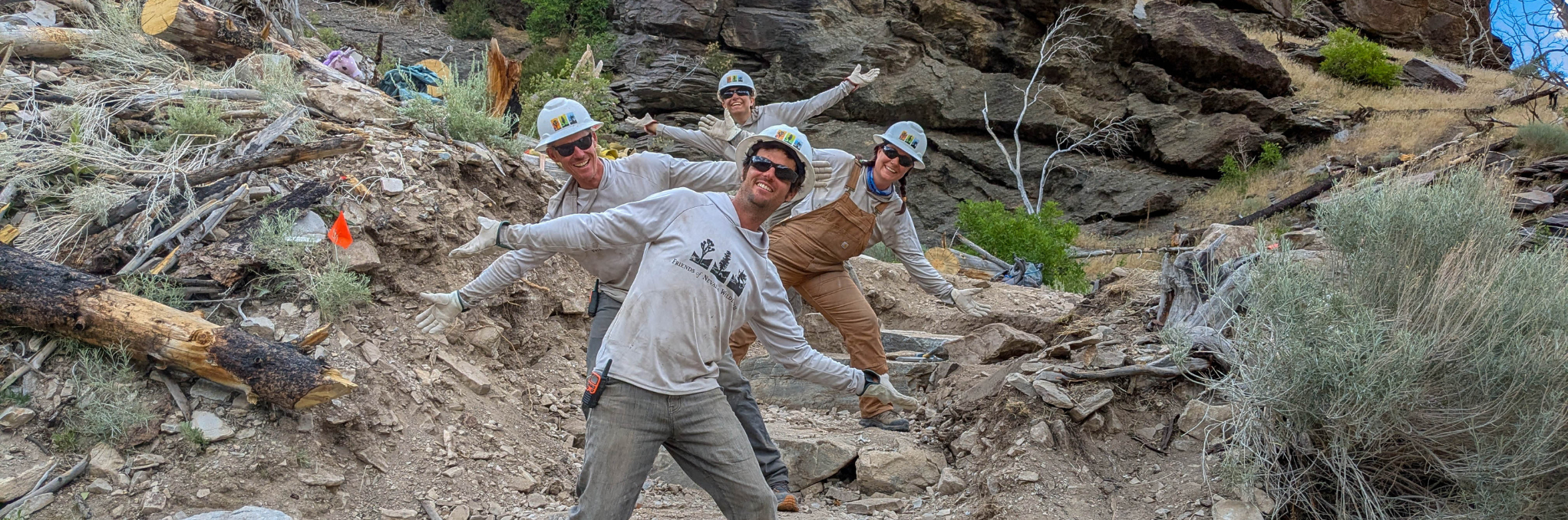
Each summer, we hire professional crews to maintain trails in the Wilderness Areas of the Humboldt-Toiyabe National Forest. According to the Wilderness Act, “A wilderness, in contrast with those areas where man and his works dominate the landscape, is hereby recognized as an area where the earth and its community of life are untrammeled by man, where man himself is a visitor who does not remain....”. In order to uphold that standard, the Wilderness Act does not permit the use of any mechanized equipment in Wilderness, including vehicles, excavating equipment or chainsaws. Our crews park their truck at the end of the roads and head off into the Wilderness with a few simple tools and an abundance of good attitudes.
Why we do it
Trails are how so many people experience Wilderness and we take care of them so that everyone can connect to the outdoors. The importance of our trail network is far too great to be left unmaintained. Keeping our trails open and safe is a way to honor our past and offer a service to future generations. Without access to Wilderness, how can we expect anyone to advocate for it? Without the experience of all our senses immersed in nature, we can’t connect to the importance of protection. Furthermore, maintained trails means less overall damage to our Wilderness areas. When trees block trails or water erodes the surface of trails, we tend to seek the path of least resistance, even if that means tromping on sensitive habitat off trail. Traveling on durable surfaces is a key principle of Leave No Trace. Our trail crews strive to make sure that is possible in the Wilderness areas we love by keeping our trails clear. We keep Nevada’s trails maintained so that everyone can experience the joy that comes from solitude and connectedness that can only be found in Wilderness.
A Day in the Life
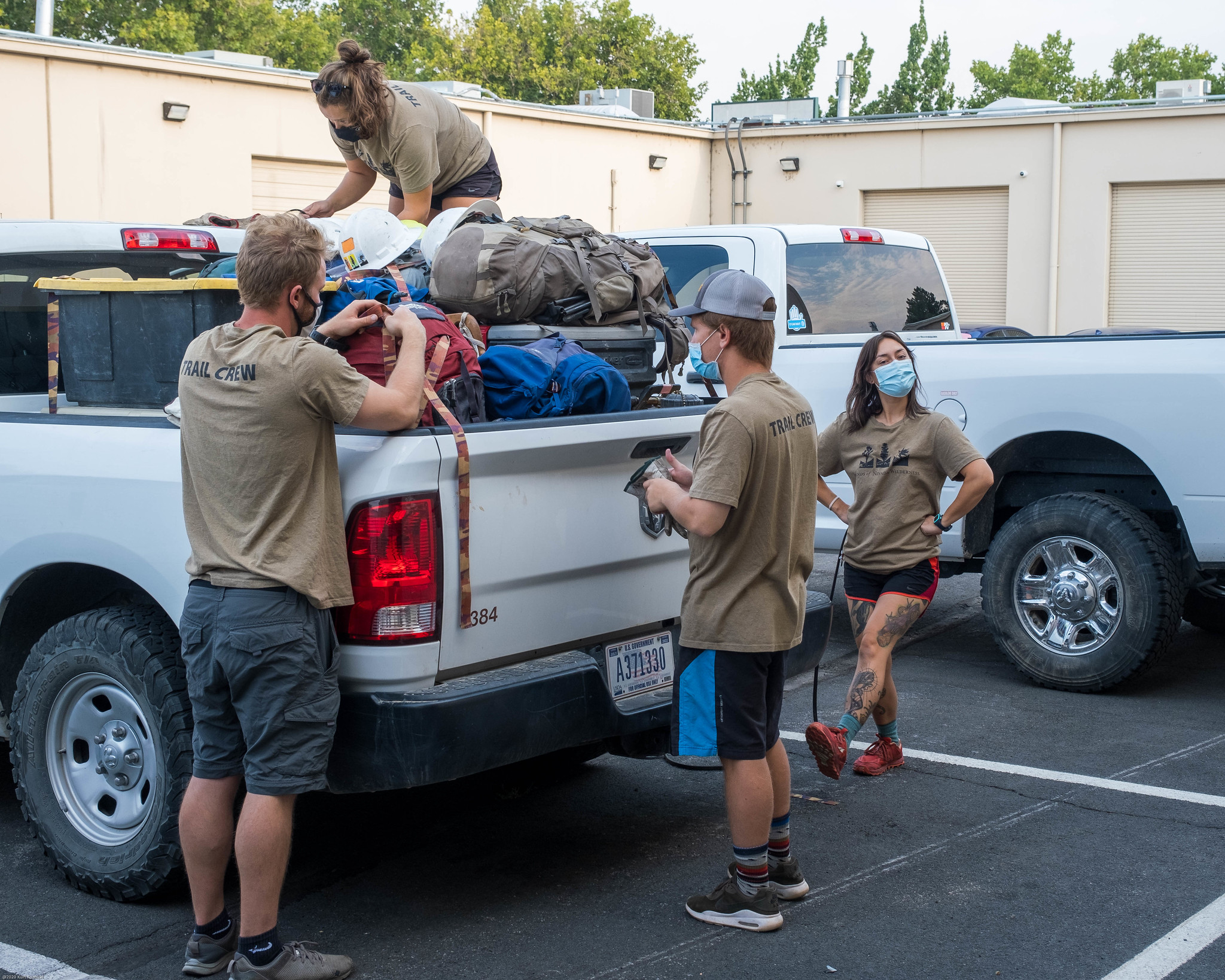
Our trail crews work 8 day straight, referred to as a "hitch" in the trail world, with 6 days off in between throughout the entire summer. A typical week begins with loading the truck at our warehouse in Sparks. We strategically pile all our camping gear, tools, camp kitchen, and food into the truck bed and drive anywhere from 3-8 hours to a trailhead somewhere in Central, Northern, or Eastern Nevada.

Luckily many of our Wilderness Areas and trailheads are situated near beautiful mountain streams, giving us plenty of fresh water and an enjoyable basecamp to re-energize at throughout the week. Basecamp is where we make delicious food, play card games and share laughs after a hard day's work.
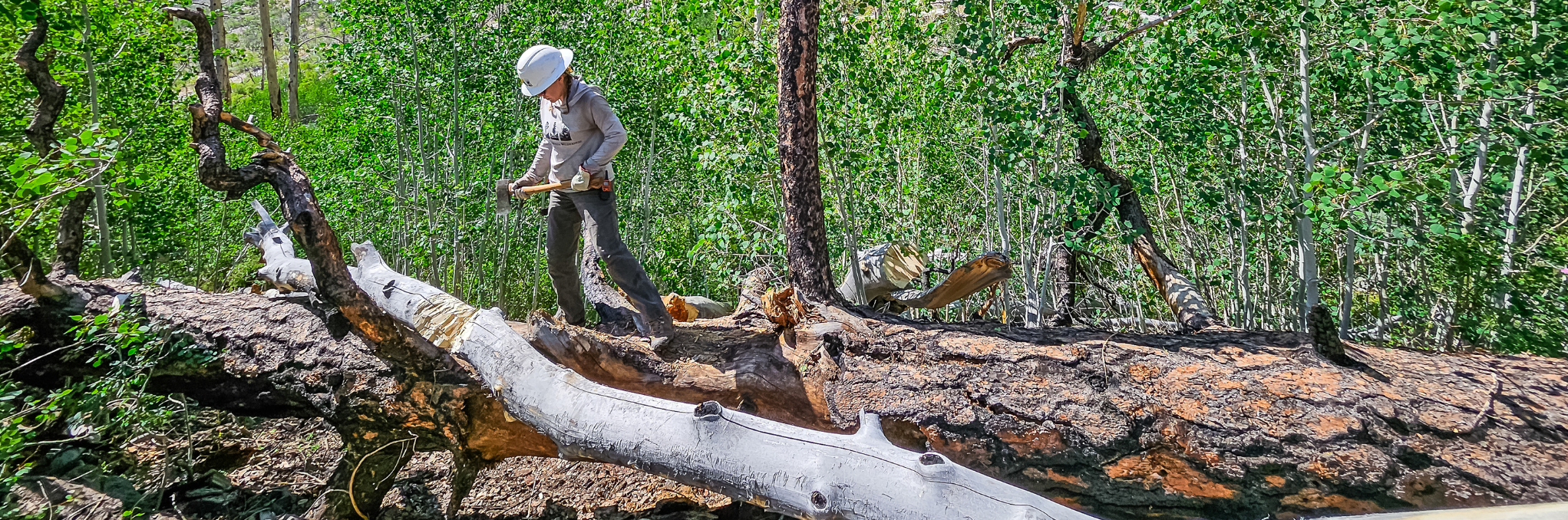
After we arrive and set up camp, we set out to hike the first few miles of trail and begin the hard work. The trails we work on are in constant need of maintenance as willow, sage, and other brush desperately tries to reclaim the small path of earth carved out for us humans. Every season, trees are struck down by lightning, blown over by wind, or crashed down by avalanches. Water, finding the path of least resistance, scours these trails creating entrenched, difficult to walk in depressions that once resembled a trail.
 Throughout our 8 day hitch, we clip back the overgrown brush, saw an opening in any fallen trees, direct water off the trail, and practice sustainable tread repair techniques to get our trails back up to standards.
It’s grueling work and often requires back aching labor, but the rewards are immediately apparent and the sense of accomplishment pours out of us faster than sweat.

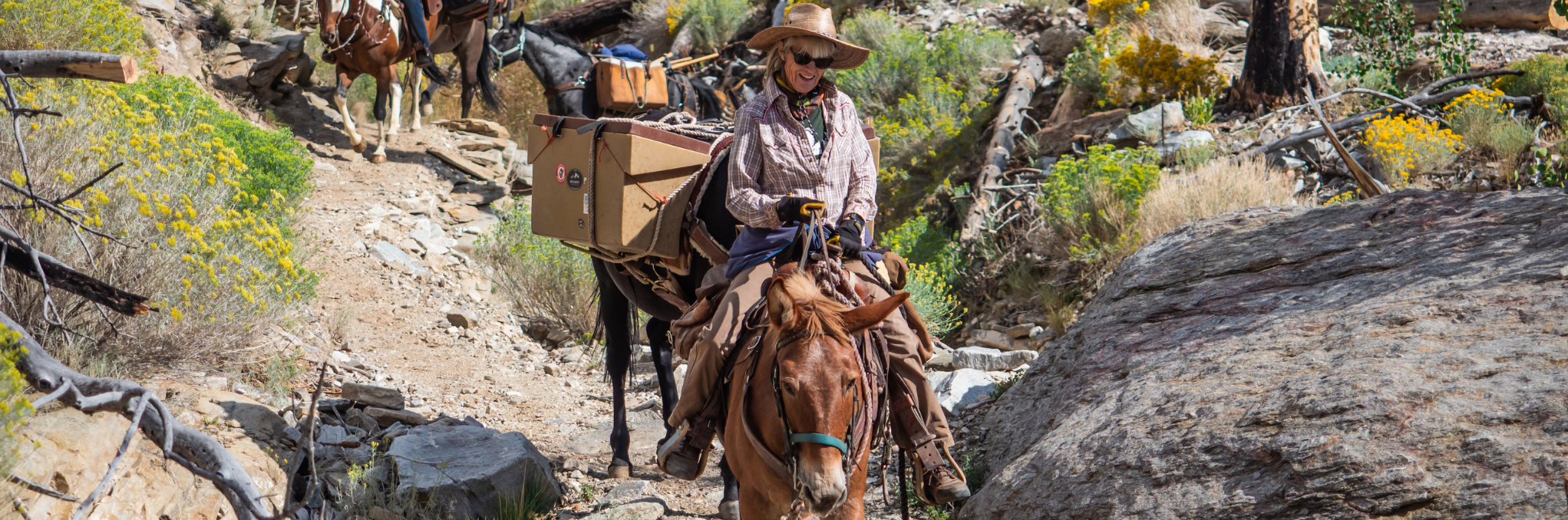
If the work that needs to be done is deeper into the Wilderness, we enlist the help of volunteer or professional horse/mule packers to carry our gear to a basecamp. This is an incredibly rewarding experience, where we get to connect with local Nevadans and learn the art of managing a string of pack stock carrying over 500lbs of gear.
How to get involved
If you'd like to spend your summer working hard for Wilderness on one of our trail crews, check the Employment page from late fall-early spring. Our professional crews run from early June to late September every summer. Crew members and crew leaders are paid a competitive hourly rate. If you have specific questions about the trail program, please contact the Trails Manager, Tara Nasvik.
If you'd like to volunteer on trails throughout the year, check the Calendar of Events for opportunities in both Northern and Southern Nevada. If you'd like to volunteer as pack support with our crews or contribute in any other way, please contact the Trails Manager, Tara Nasvik.
2025 Season Recap
This was a busy year! Our two professional trail crews spent a large portion of the summer season restoring the Hampton Creek trail in Mount Moriah Wilderness. This trail was destroyed in 2014 during a series of wildfire and 2 floods. We've partnered with the Forest Service with funding through SNPLMA (Southern Nevada Public Lands Management Act) to open up access to the Table from this beautiful drainage. The first two miles of trail are now complete and in excellent condition and the remainder of the trail is scheduled to be finished by the end of 2026. We hosted two volunteer projects on Hampton Creek and one pack supported trip with the Backcountry Horsemen, all contributing to the impressive progress!
Across the rest of the state, our crew maintained over 40 miles of Wilderness trail, clearing 365 trees along the way! This maintenance was possible with funding from Nevada's RTP (Recreation Trails Program). FNW volunteers participated in 5 additional trail maintenance projects throughout the state beyond the Mount Moriah work, and the volunteer Wilderness Trail Scouts collected trail condition data on 17 different trails to help the trails team plan and prepare for all the work. Check out some photos from the season!
Trails Maintained in 2025:
- Pine Creek and Middle Summit; Alta Toquima Wilderness
- North Fork Mosquito Creek; Table Mountain Wilderness
- Big Canyon; Mount Moriah Wilderness
- Kraft, Kolcheck, and Piermont; High Schells Wilderness
- Rim to Reno and Davis Meadow; Mount Rose Wilderness
- Camp Creek; Jarbidge Wilderness
- Andorno Creek; Santa Rosa-Paradise Peak Wilderness
- Peavine Canyon; Arc Dome Wilderness
- South Loop, Eagle's Nest, and Griffith Peak; Mount Charleston Wilderness
For more information on previous work done by the FNW Trails Team, check out the Wilderness Trails Map page, which highlights our maintenance history!
Special Thanks

Our trail program wouldn't exist without the hard work of our partners, grantors, volunteers, and donors. A special thanks to our Forest Service partners who help make every season a success. We would also like to thank the Recreational Trails Program for the many years of funding provided to complete this difficult and remote work. We're so grateful for pack support from both the Backcountry Horsemen of Nevada volunteers and professional outfitter, Sage N' Pine. Their dedication enables us to maintain trails farther into Wilderness. Our crews are trained each season by one of the highest respected industry professionals, Dolly Chapman. Her technical trail skills sprinkled with life lessons leave our crews inspired and ready for a safe and productive season. For everyone who's donated their time and energy on trails in Nevada or committed funds to support the crews, thank you for all you do for Wilderness.
Accepting Applications for the 2026 field season soon! Check our Employment Page