
What's Out There?
Sensitive Wildlife
Fish: Lahontan cutthroat trout (threatened, inhabiting McDermitt Creek).
Mammals: Mule deer, California bighorn sheep, Rocky Mountain elk, pronghorn, coyotes, mountain lions, badger, pika, black-tailed jackrabbit, white-tailed jackrabbit, Audubon’s cottontail rabbit, and pygmy rabbits.
Birds: Greater Sage-Grouse, Golden Eagle, Red-tTailed Hawk, Ferruginous Hawk, Swainson’s Hawk, Rough-Legged Hawk, Northern Goshawk, Peregrine Falcon, Prairie Falcon, Merlin, American Kestrel, Great Horned Owl, Barn Owl, Short-Eared Owl, Long-Eared Owl, Western Screech Owl, Flammulated Owl, Northern Pygmy Owl, Northern Saw-Whet Owl, Western Burrowing Owl,
Amphibians: Columbia spotted frog.
Key Plants & Vegetation
Vegetation zones transition from arid sagebrush steppe to canyon and higher elevation woodlands, providing essential cover and food for a diverse array of wildlife.
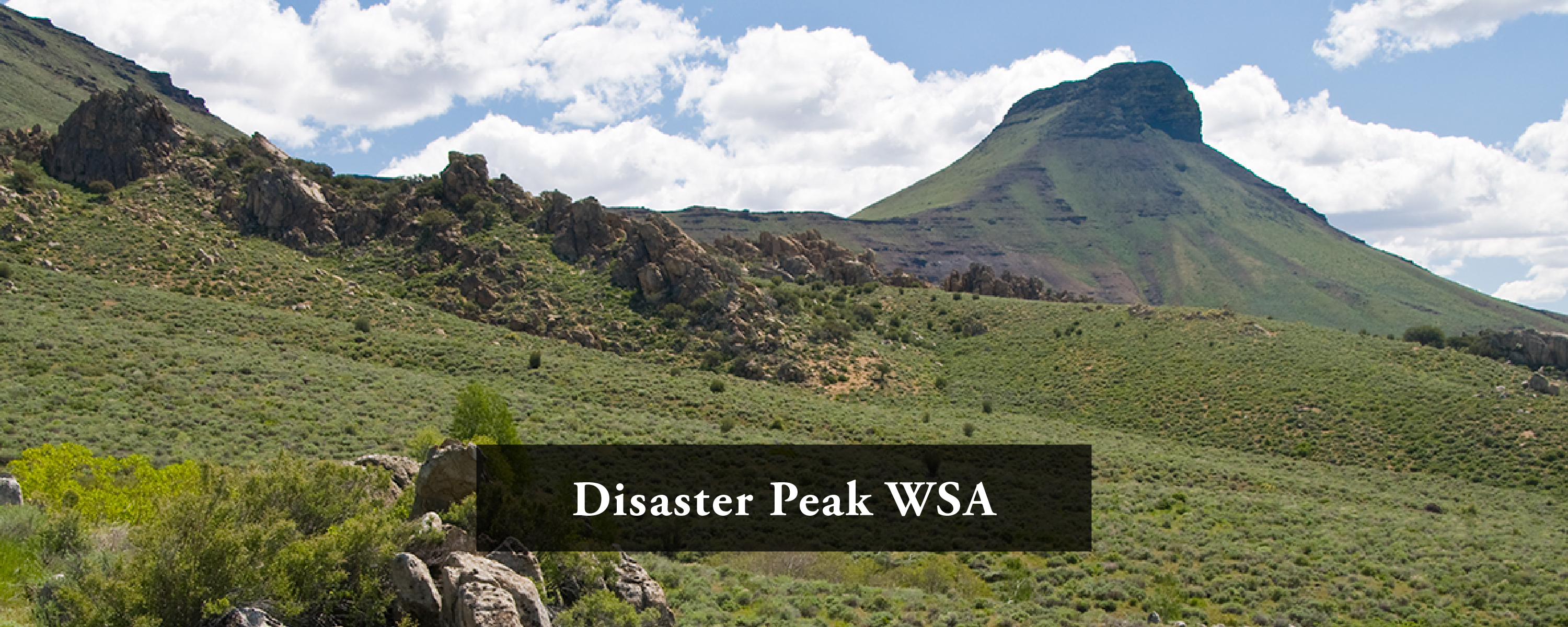
Sagebrush-Steppe Dominance: Sagebrush-dominated shrubland ecosystem, which serves as a major habitat component for a rich diversity of cold desert faunal species. Broad ridges and rolling hills are covered in vast stands of sage (Artemisia spp.) and many species of desert and upland grasses.
Canyon Woodlands: Riparian zones along McDermitt Creek and Kings River feature thick groves of aspen, curlleaf mountain mahogany, alder, western juniper and willow species. Alongside the aforementioned species grows many species of rushes and sedges, flowering forbs and many species of endemic grasses.
Riparian: Thickets of alder and willow, sedges and rushes, endemic grasses, etc.
Woodlands: Mountain mahogany cohabitating with various species of native grasses.
Forbs: Diverse array of flowering species, including early-season pollinators such as rare species like Cusick hyssop and various species of milkvetches.

Cultural Resources
For over 10,000 years, the landscape surrounding Disaster Peak and the McDermitt Caldera has been shaped by human history. This region serves as a vital repository of Indigenous heritage, marked by ancient artifacts, sacred traditions, and significant historical events.
Ancestral Lands: This territory is the traditional home of the Northern Paiute (Numu), Shoshone (Newe), and Bannock peoples.
Peehee Mu’huh (Thacker Pass): A sacred site at the caldera’s southern edge known as "Rotten Moon," which serves as a memorial for the 1865 massacre of Indigenous people by the U.S. Cavalry.
Traditional Food & Medicine: The area remains a living pharmacy and pantry, where tribal members still harvest "First Foods" and medicinal plants like bitterroot, wild onions, and biscuitroot.
Ceremonial Landscapes: The entire region holds spiritual importance, hosting modern ceremonies that reinforce the sacred bond between the community and the natural world.
Archaeological Records: Extensive fieldwork has uncovered vast amounts of prehistoric evidence, including ancient stone tools and seasonal camps used by nomadic groups for thousands of years.